
Content
Introduction
In perfumery, packaging no longer serves only an aesthetic or protective function. Today, it is a brand decision-making tool: it influences product perception, the shopping experience, logistics, and how a fragrance positions itself against the competition.
In 2026, brands will not only seek more attractive packaging. They will look for solutions that help them communicate better, optimize costs, strengthen their identity, and adapt to channels such as retail, gifting, or eCommerce.
Therefore, rather than discussing isolated trends, it is important to understand what type of packaging makes sense depending on the product, objective, and timing of each brand.
In this article, we gather 8 packaging trends for perfumes that will define 2026 and, additionally, 5 key insights from Josep Maria Garrofé, founder and director of SelfPackaging, to help you make more informed decisions.
What is changing in perfume packaging in 2026
Perfume packaging is evolving toward more strategic solutions. It is no longer just about presenting a bottle well but about better responding to specific needs: standing out in retail, protecting during shipping, reinforcing premium perception, building coherent collections, or reducing material without losing brand value.
In this context, brands need more than inspiration: they need criteria to choose the most suitable packaging based on their product and timing.
8 perfume packaging ideas that will set trends in 2026
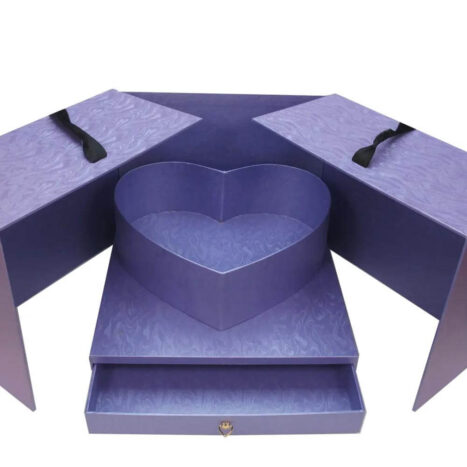
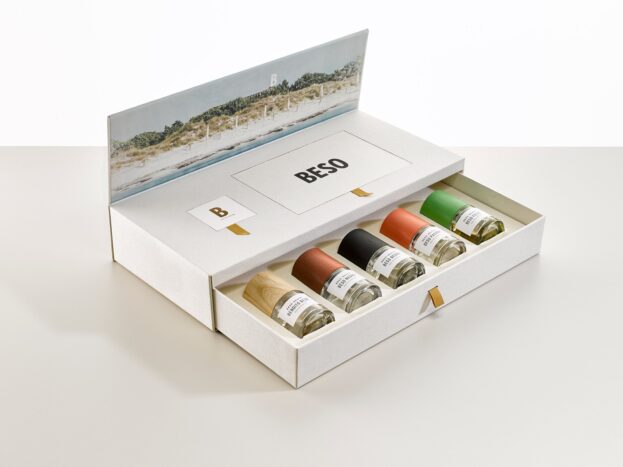
1. Experiential opening boxes
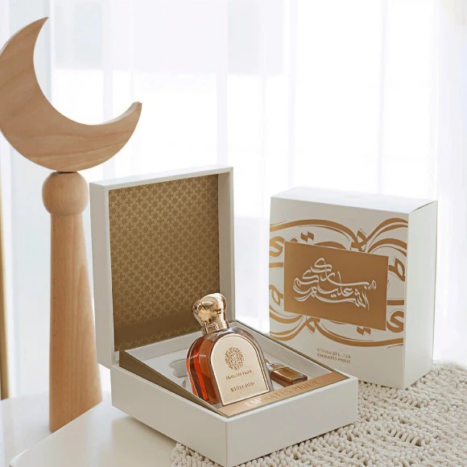
Unboxing will continue to gain importance in perfumery, especially for brands aiming to reinforce the emotional component of the product. Book-style, drawer, or fold-out openings help turn the box into part of the experience.
- When it makes sense: launches, gifting, premium editions, or brands that want to elevate perceived value.
- What it brings: greater impact, stronger brand recall, and a more carefully crafted opening experience.
SelfPackaging option: premium perfume box
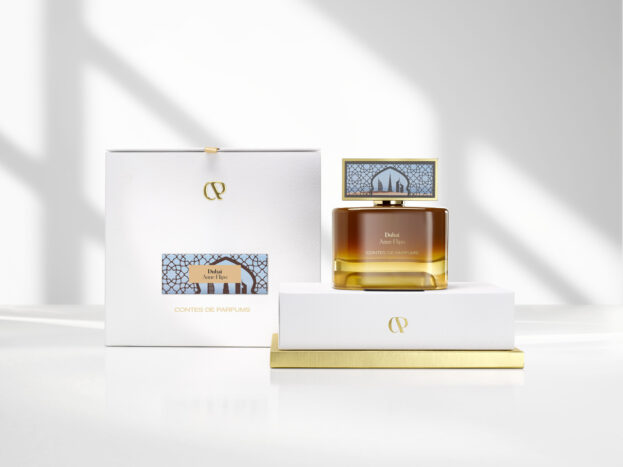
2. Luxury minimalism
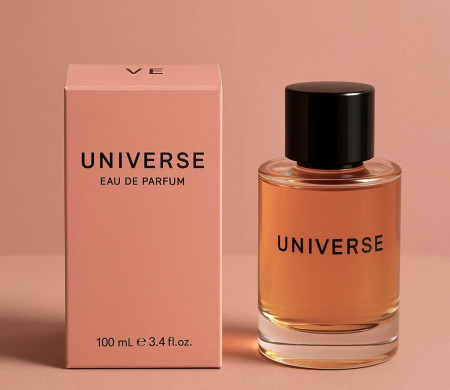
Luxury in perfume packaging does not always come from complex structures. In 2026, a cleaner and more restrained approach will continue to grow, based on refined typography, few visual elements, and flawless execution.
- When it’s suitable: premium brands, contemporary fragrances, or elegant and timeless positioning.
- What it brings: sophistication, visual clarity, and greater brand coherence.
SelfPackaging option: elongated box for perfume
3. Reusable packaging
Reuse becomes important when the box can have a second useful life and remain present in the customer’s daily life.
- When it makes sense: special collections, gifts, mid-to-high-end perfumes, or brands aiming to extend the consumer relationship.
- What it brings: longer brand presence at home and higher perceived value.
4. Textures and materials with greater presence
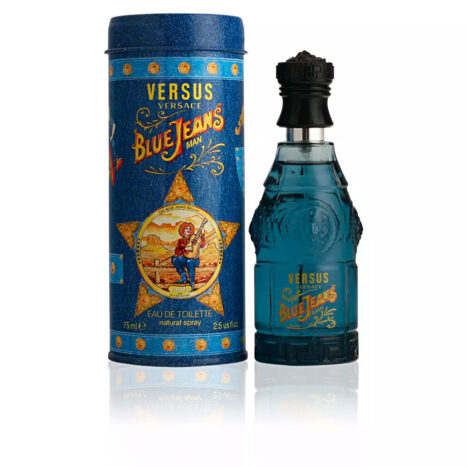
Perfume packaging will continue to explore the tactile component with textured papers, embossing, and finishes that provide a richer perception of the product.
- When it’s suitable: premium perfumes, highly defined sensory universes, or brands wanting to elevate perceived quality without overloading the design.
- What it brings: more differentiation and a more complete experience from the first contact.
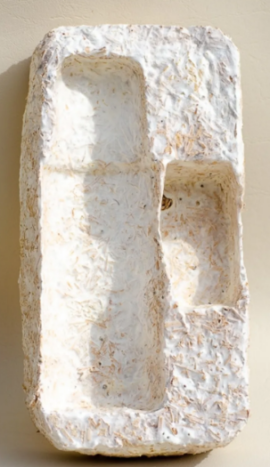
5. Sensory packaging
Beyond aesthetics, some brands will seek packaging that anticipates the perfume’s universe through touch, material, or even small olfactory elements.
- When it makes sense: brand launches, strong storytelling, or experiences heavily focused on emotion and memory.
- What it brings: coherence between product and presentation, and a more immersive experience.
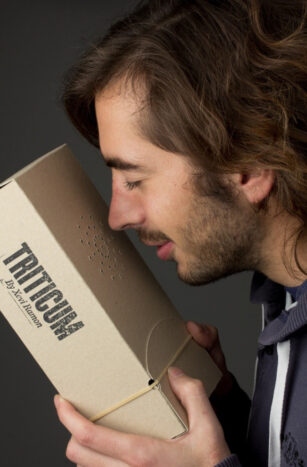
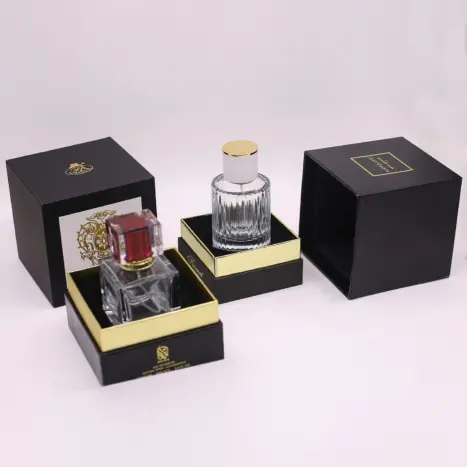
6. Limited editions and collectibles
Limited editions will continue to be a differentiation lever in perfumery. Specific packaging for campaigns, collaborations, or key dates helps generate desire and urgency.
- When it’s suitable: seasonal campaigns, collaborations, capsule collections, or brand anniversaries.
- What it brings: exclusivity, higher perceived value, and the opportunity to drive impulse purchases.
SelfPackaging option: rectangular rigid box
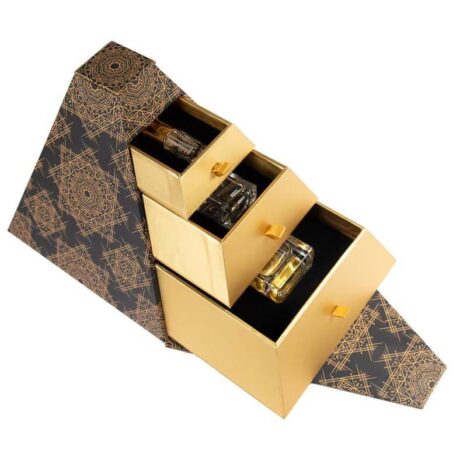
7. Storytelling packaging
More and more brands use packaging as an extension of their story: ingredient origin, creative inspiration, visual universe, or brand message.
- When it makes sense: perfumes with a clear differential proposition, emerging brands, or collections with strong narrative.
- What it brings: greater emotional connection and richer communication without relying solely on the bottle or campaign.
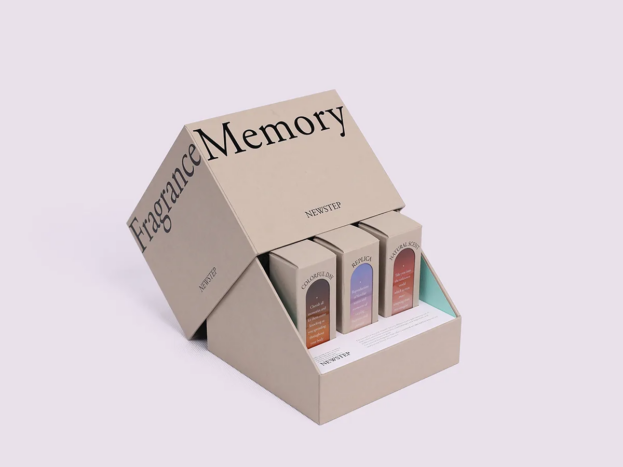
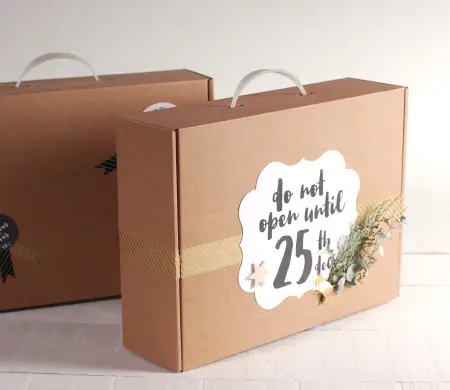
8. Compact formats designed for eCommerce
The growth of online channels requires thinking about packaging not only in terms of design but also in durability, logistical efficiency, and shipping cost.
- When it’s suitable: online sales, brands with high digital channel weight, discovery sets, or travel formats.
- What it brings: better protection, fewer incidents, and a more efficient solution to sell online without losing brand image.
SelfPackaging option: carrying case box
5 expert keys on the future of perfume packaging
In addition to these trends, there are five particularly relevant strategic evolution lines. These are ideas shared by Josep Maria Garrofé, founder and director of SelfPackaging, to understand where packaging decisions in perfumery are truly headed.
1. Think of packaging as a system when there are collections
As brands expand product lines, the challenge is no longer designing a single box but a coherent system that allows recognition of the collection and differentiation of each fragrance.
- Keys: visual coherence, modularity, color codes, and scalability.
- Why it matters: facilitates growth without losing identity.
2. Personalization is no longer extra but an expectation
Personalization will continue to gain weight in both campaigns and more segmented experiences. It does not always imply extreme complexity but does require greater adaptation to brand context and commercial timing.
- Why it matters: helps differentiate in a saturated market and increases the emotional value of the product.
- For more personalized perfume lines, contact SelfPackaging
3. Small quantities gain relevance
Not all brands need large runs. It increasingly makes sense to launch collections, market tests, or special editions with controlled quantities.
- Why it matters: provides flexibility, reduces risk, and allows validation of ideas without overproduction.
4. Reducing material will become an increasingly strategic decision
Sustainability is not only about choosing recyclable materials but also about designing more efficient, lightweight, and proportionate structures for the product.
- Why it matters: reduces logistics costs, improves efficiency, and helps build a more coherent offering.
5. Plastic finishes will lose weight
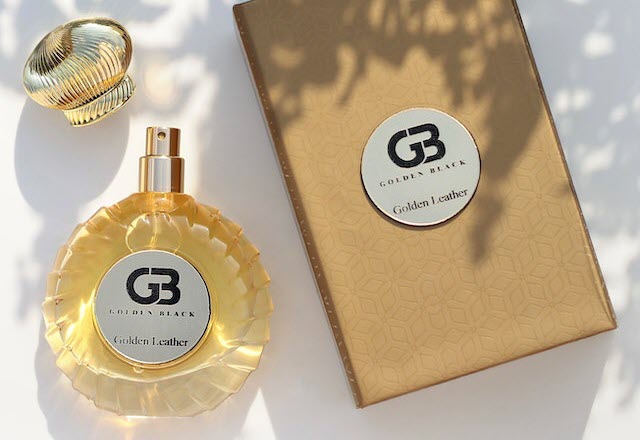
The industry will continue to move toward solutions with better recyclability and less dependence on laminates or finishes that complicate packaging end-of-life.
- Why it matters: improves brand perception and aligns packaging with increasingly demanding sustainability expectations.
How to choose the right packaging for a perfume based on your goal
Not all trends fit all brands equally. Choosing the right perfume packaging depends on several variables: product type, sales channel, brand timing, and main packaging objective.
If your priority is to stand out in-store or gifting
Strengthen experience, visual presence, and perceived value. Experiential openings, refined finishes, and special editions fit well.
If your priority is online sales
Focus on compact formats, durable structures, and solutions that balance image, protection, and logistical efficiency.
If your priority is branding
Visual coherence, storytelling, and work on materials, typography, and collection system gain importance.
If your priority is cost and material optimization
Simplify structure, reduce weight, and remove elements that do not add real value to the product or experience.
Find your perfume box according to your priorities
Conclusion
In 2026, perfume packaging will continue to evolve, but not just in aesthetic terms. The real difference will be in choosing solutions that better respond to the product, channel, and timing of each brand.
Rather than following trends by inertia, the opportunity is to make packaging decisions with greater discernment: know when to prioritize experience, when to optimize logistics, when to reinforce brand storytelling, and when to simplify for efficiency.
In perfumery, it is not only about presenting a fragrance well. It is about building a coherent experience and smarter brand decision-making through packaging.
FAQ on perfume packaging
What type of packaging is best for perfumes in eCommerce?
It depends on format and brand positioning, but in online sales, it is key to find a balance between protection, presentation, and logistical optimization.
How to make perfume packaging more sustainable?
Besides choosing appropriate materials, it is advisable to reduce weight, avoid unnecessary plastic finishes, and work on more efficient structures.
What packaging is suitable for a premium perfume brand?
Solutions with high perceived quality, refined openings, material presence, and a very coherent visual identity usually work best.
When does it make sense to personalize perfume boxes?
Especially for launches, campaigns, limited editions, or brands aiming to reinforce differentiation and purchase experience.
How to choose a perfume box based on brand objective?
The decision should start from the main use: retail, eCommerce, gifting, collection, promotion, or premium positioning.