
Content
In jewelry, packaging is not an accessory: it is part of the product.
The way you present a piece directly influences how its value is perceived, the customer experience, and the likelihood of repeat purchase. Receiving a ring in a basic bag is not the same as receiving it in a well-designed box.
But beyond aesthetics, choosing the right packaging involves making decisions: product type, sales channel, brand positioning, or even logistics.
In this article, you will not only find ideas, but clear criteria to choose the jewelry packaging that best fits your case.
Why packaging makes the difference in jewelry
Before getting into specific decisions, there is something important: in jewelry, packaging carries more weight than in many other categories.
- It reinforces perceived value: good presentation can elevate how the piece is perceived
- It builds brand identity: it helps you stand out in a saturated market
- It defines the experience: especially in moments such as gifting
- It impacts e-commerce: where packaging is the first physical contact
That is why, instead of asking “which box should I use”, the real question is: what experience do you want to create?
What type of jewelry packaging to choose depending on product and goal
Not all jewelry needs the same type of packaging. This is where many brands fail: they apply a generic solution to everything.
For rings and small pieces
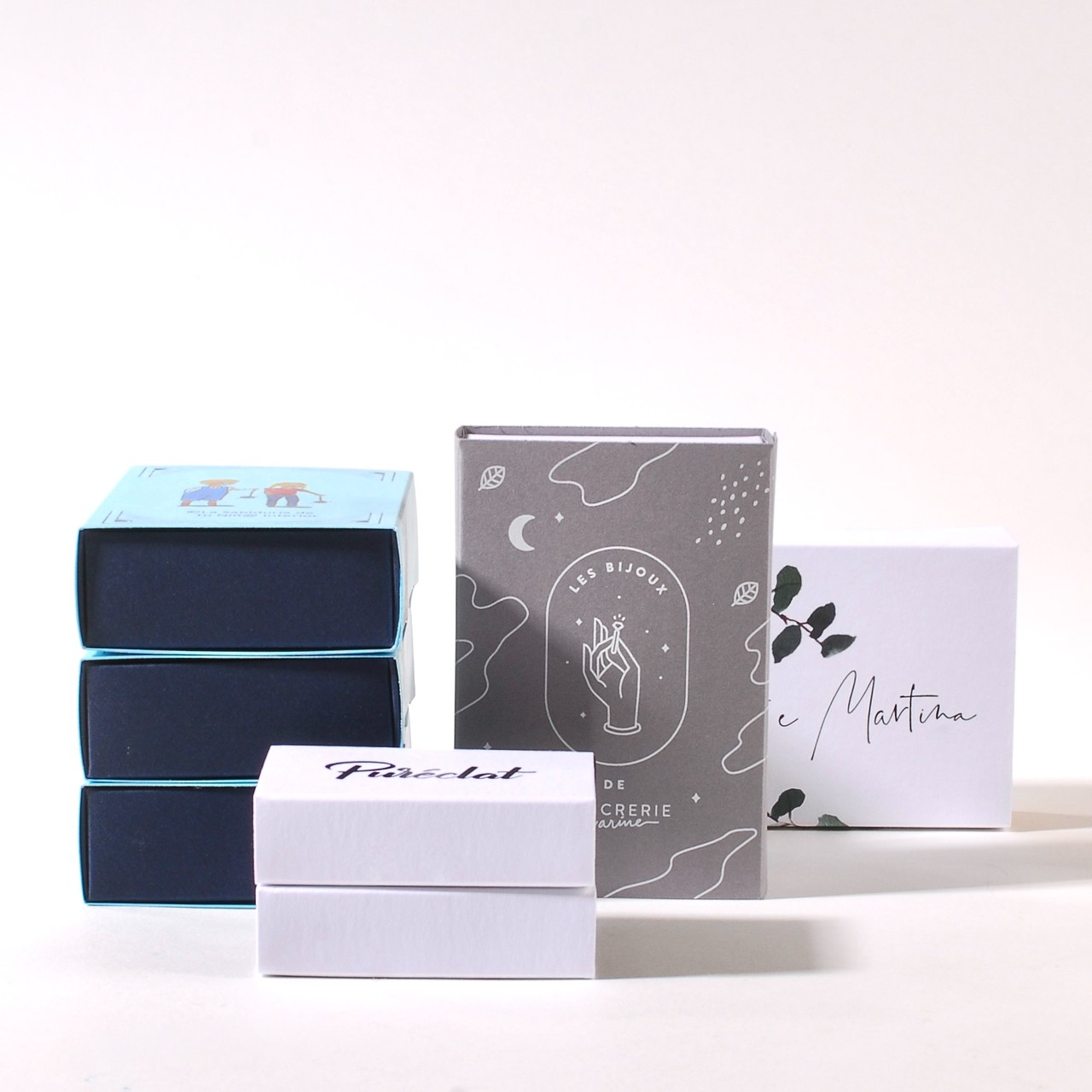
Small items work best with compact boxes that:
- Prevent internal movement
- Protect the product properly
- Create a sense of care
Rigid boxes or those with padded interiors are usually the best option.
For necklaces, bracelets, or sets
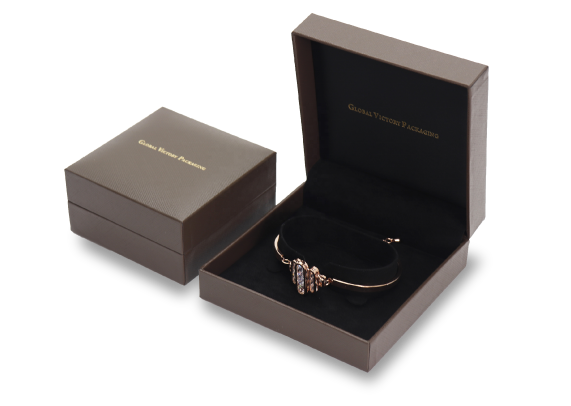
Here you need more space, but without losing structure.
- Boxes with inserts or internal supports
- Formats that prevent tangling
- Greater visual presence if it is a gift product
If gifting is your priority
In this case, packaging is almost as important as the jewelry itself.
- High-quality materials
- Careful opening experience
- Details such as ribbons, messages, or inner tissue paper
This is where investing in a full experience makes the most sense.
If you sell in physical stores
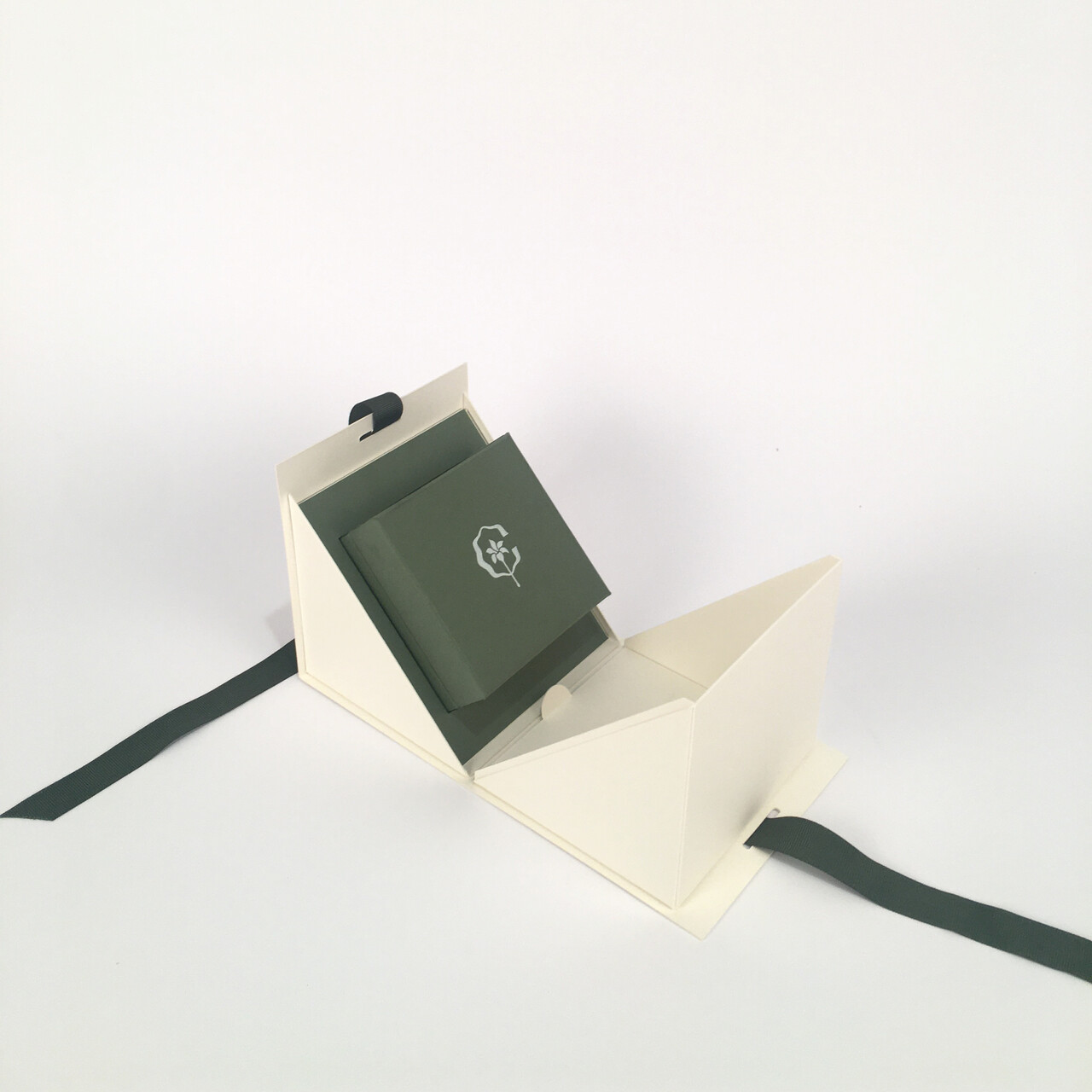
You can afford lighter packaging since there is no shipping involved.
- Simple but well-designed bags or boxes
- Practical day-to-day solutions
- Visual consistency with the retail space
If you sell online
Here packaging must fulfill two functions:
- Protect the product
- Maintain the brand experience
The most common approach is to combine:
- Product box (more refined)
- Shipping box (more resistant)
Discover our jewelry boxes and find the format that best fits your product and your brand.
Materials and finishes: how they influence brand perception
Material does not only affect cost. It defines how your brand is perceived.
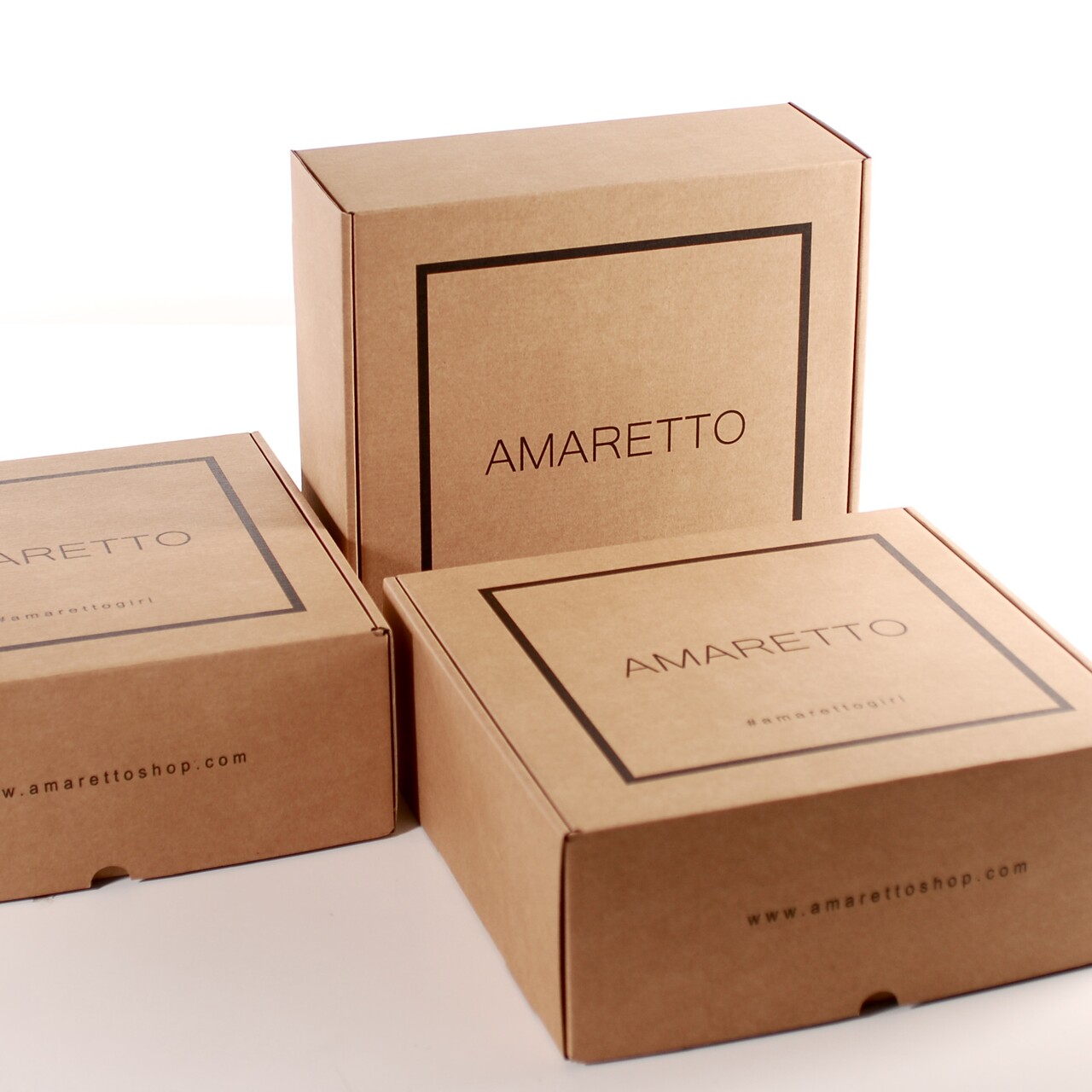
Cardboard: the balance between cost and customization
It is the most versatile option. It allows different weights, finishes, and printing techniques.
Kraft paper and natural materials
Widely used by brands with a more sustainable or artisanal positioning.
They convey authenticity and closeness.
Recycled materials
Increasingly common. They work especially well when they are part of the brand story, not just an aesthetic decision.
Finishes that make the difference
Small details can completely change perception:
- Hot stamping (metallic finishes)
- Embossing
- Matte or soft-touch lamination
It is not about using all of them, but selecting the right ones for your positioning.
Sustainable packaging in jewelry: how to apply it without losing positioning
Sustainability is no longer a bonus. It is an increasing expectation.
But a common mistake is thinking that sustainable means basic.
You can work with sustainable packaging while maintaining a premium image if you take care of:
- Design (well-executed minimalism)
- Material quality
- Finishes (even subtle ones)
In addition, reducing volume and materials not only improves environmental impact, it also optimizes logistics costs.
Shipping packaging for jewelry: how to protect the piece without losing brand experience
In e-commerce, this is critical.
Real protection (not just aesthetics)
Prevents movement inside the box
Use fillers when necessary
Ensure external resistance
Optimized size = lower costs
Oversized packaging increases shipping costs and worsens the experience.
Do not neglect the exterior
Even if it is a shipping box, it is still part of the brand.
No need to overinvest, but it should be carefully designed:
- Visual cleanliness
- Consistency
- Minimal details
Practical recommendation
One of the most effective combinations:
- Well-designed jewelry box
- Durable and properly sized shipping box
- Brand element (card, message…)
How to design jewelry packaging based on positioning, channel, and experience
This is where everything comes together.
Before designing, answer these three questions:
- What type of brand are you?
Premium
Sustainable
Accessible
Minimalist - Where do you sell?
E-commerce
Retail
Both - What experience do you want to create?
Gift
Impulse purchase
Exclusive product
Once this is clear, decisions become much easier:
- Box type
- Material
- Level of customization
- Investment
Common mistakes in jewelry packaging
Avoiding these mistakes can save you costs and problems:
Choosing only based on aesthetics
Many brands focus only on how packaging looks, but forget the most important thing: protecting the jewelry.
For example, a very thin box or one made with low-resistance materials can damage a ring or necklace, even if it looks premium. The balance between design and functionality is essential.
Not considering the sales channel
Packaging that works in physical stores is not always suitable for e-commerce.
In-store, you can use a lightweight box that the customer carries directly.
In e-commerce, that same box needs a protective outer layer to withstand shipping and handling.
Ignoring this difference can lead to returns or poor delivery experiences.
Over-packaging
More material does not always mean better experience. Adding too many layers, ribbons, or fillers can be unnecessary and unsustainable.
Customers often perceive excess as complicated or impractical. It is better to optimize packaging, keeping only what adds protection and visual value.
Not considering scalability
A very complex packaging can be beautiful and distinctive, but difficult to manage as you grow.
Small productions allow for highly customized details.
As volume increases, long or manual processes become costly and inefficient.
Planning ahead with scalability in mind allows you to maintain quality without losing logistical efficiency.
Conclusion
Choosing the right jewelry packaging is not about following trends, but about making decisions that are consistent with your brand, your product, and your sales channel.
When packaging is well designed:
- It reinforces product value
- Improves the experience
- Reduces logistical issues
- And helps you stand out